The 5 Best Indoor Cat Breeds for Apartment Life
Published · Research-based comparison — how we work · 7 min read
 Snoof's TL;DR
The Ragdoll — CFA's #2 breed in 2024 and a cat bred to be carried around — leads the list, followed by the British Shorthair, Exotic Shorthair, Russian Blue, and Sphynx. Four of the five are quiet, floor-level, moderate-energy cats; the Sphynx is the loud exception you pick on purpose.
Some links may earn us a commission — disclosure.
Most cats can live indoors. These five are built for it — breeds whose published temperament profiles read “moderately active,” “prefers all four feet on the floor,” and “rarely meows,” which in an apartment translates to intact curtains, unbothered neighbors, and a cat that treats a 700-square-foot unit as a complete world rather than a holding cell. We ranked using the Cat Fanciers’ Association’s (CFA) 2024 registration data plus each breed’s official CFA temperament profile, then weighted the things apartment life actually tests: energy level, voice, tolerance for your work schedule, and grooming load.
The ranking is for a typical apartment household — working owner, moderate space, neighbors with opinions. A different household reorders the list, and we’ll flag exactly where.
1. Ragdoll
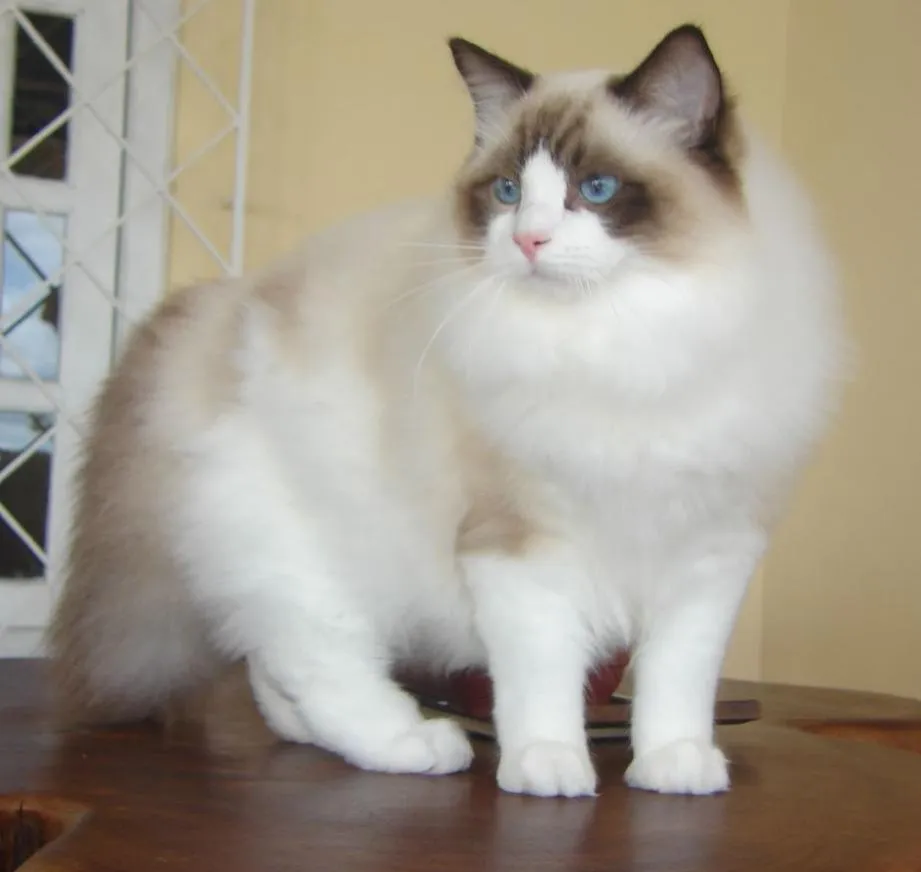
The CFA’s #2 breed by 2024 registrations (it held #1 for several years before the Maine Coon took the crown), and the closest thing cat fancy has produced to a purpose-built indoor companion. The CFA profile describes a “gentle, calm and sociable” cat that’s “loving without being demanding” — moderately active, happy to play, but not a climber of bookshelves or a 3 a.m. sprinter. Voice: “not talkative,” the profile says; expect “a soft mew from time to time.”
Size is the one spec that surprises people: males commonly reach or exceed 20 lbs. That’s a lot of cat for a studio, but it’s 20 lbs of floor-dwelling calm, not 20 lbs of vertical ambition. Ragdolls are also notably trainable — fetch is common — which helps burn energy in a small space. If your household has kids or a dog, this is the pick; the breed’s tolerance for handling is the core of its reputation.
2. British Shorthair
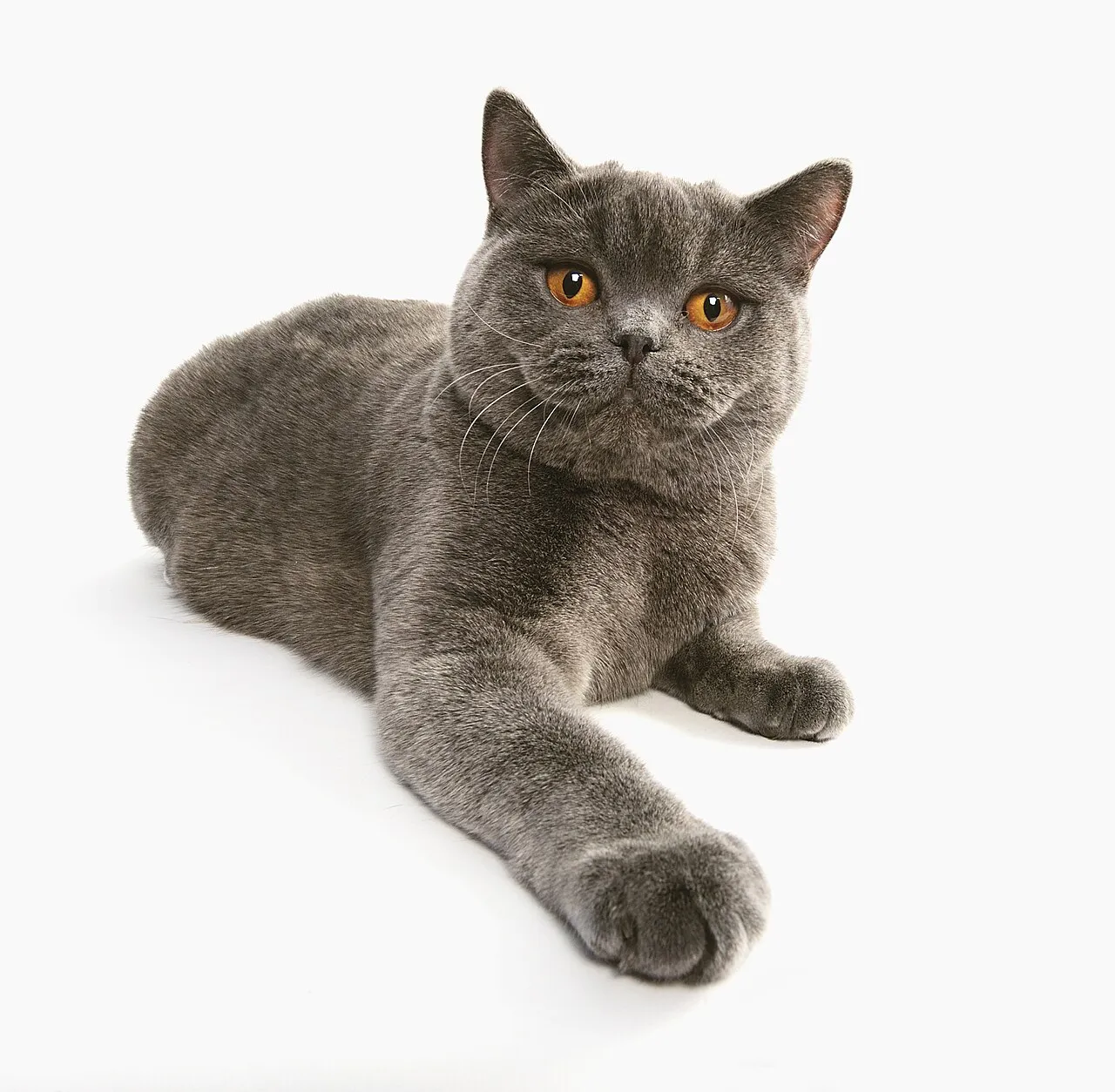
CFA rank #7 in 2024, and the profile is an apartment lease in cat form: “quiet, sedate,” “most comfortable keeping all four feet on the floor,” and content to supervise your life from the middle distance rather than demand a starring role in it. This is the cat for the owner who’s out all day — the breed is famously self-sufficient, and the CFA notes it “rarely engages in lengthy conversation.”
Know what you’re getting: this is not a lap cat. The profile is explicit — it’ll sit beside you by invitation and isn’t fond of being carried. Males run to 17 lbs at maturity, the plush coat needs only routine brushing, and the main hazard is that a dignified cat that dislikes loud chaos may spend your parties under the bed. For a quiet one-person apartment, that’s not a bug.
3. Exotic Shorthair
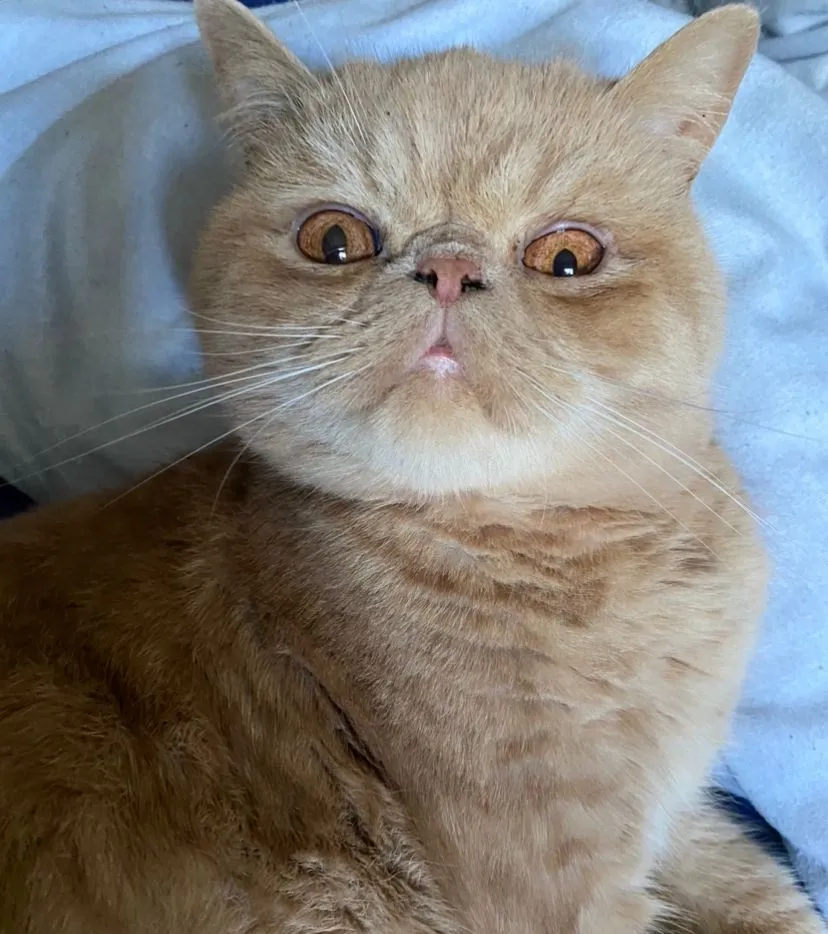
The Exotic is the Persian in sweatpants: CFA rank #4 in 2024, bred to Persian temperament — the CFA says there’s “practically no difference between the two breeds when it comes to personality” — but wearing a plush, dense coat that needs a weekly comb instead of the Persian’s daily production. That maintenance discount is the whole pitch, and it’s a good one.
Temperament-wise the profile reads “quiet, loyal,” “devoted but not intrusive” — a cat that stations itself near you without demanding inclusion. Voice is nearly absent: “purrs but meows will be rare,” per the CFA. Energy is the lowest on this list, which makes the Exotic the best match for genuinely small spaces. The flip side: if you want an interactive, fetch-playing cat, look up-list; this one’s love language is proximity.
4. Russian Blue
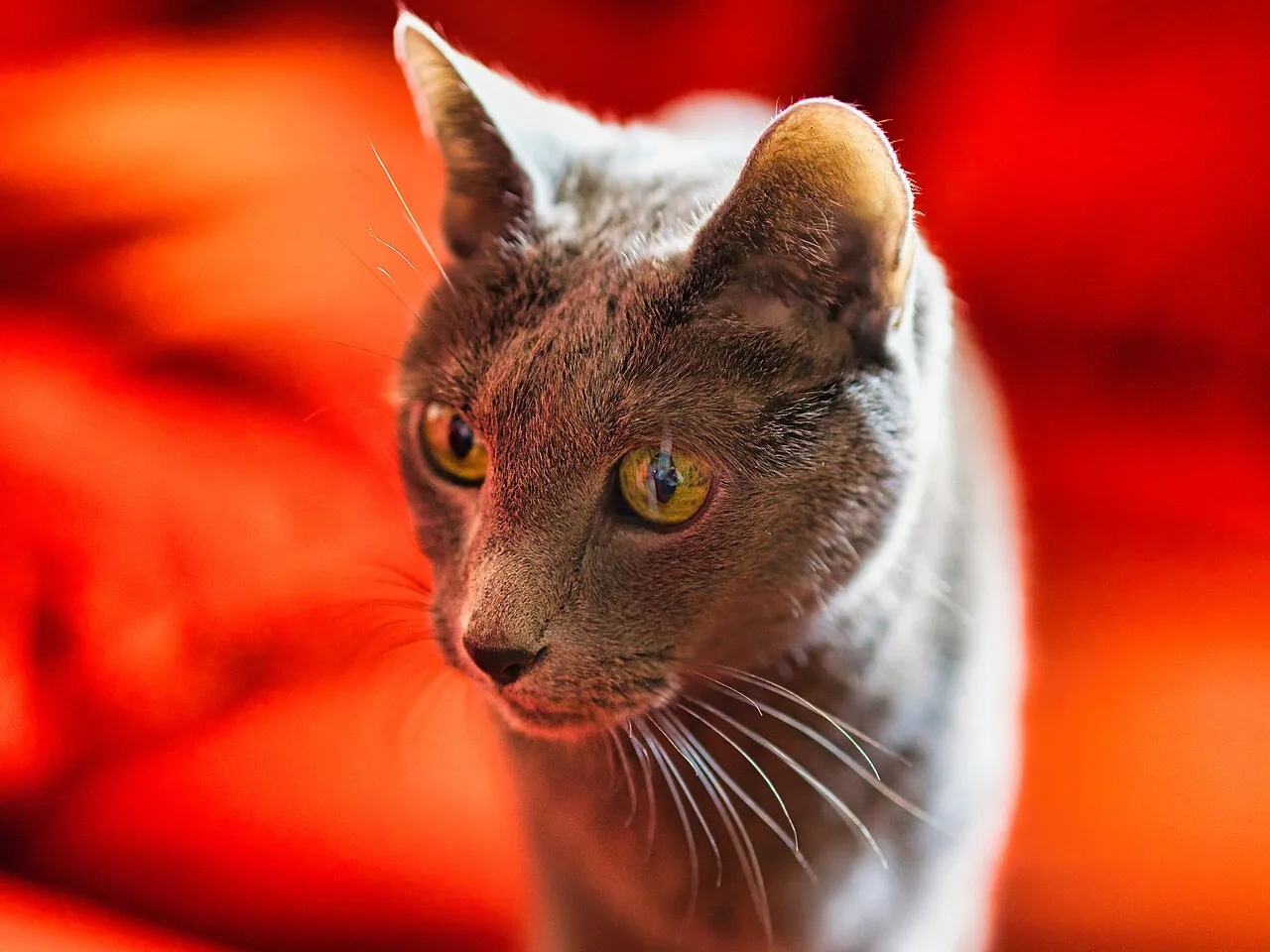
CFA rank #10, and the specialist’s pick: the profile says Russian Blues “don’t need a lot of space to feel content” — as close as the CFA gets to writing “apartment cat” on the label. It’s a quiet, reserved breed that hides when the doorbell rings, then reappears once it has vetted your guests. With its own family it’s a different animal: a lap-seeker and shoulder-rider the CFA calls “very sensitive to their owners’ moods.”
Two more apartment-relevant specs: the dense silver-tipped coat needs only a comb two or three times a month, and the breed handles a predictable solo-day routine well — it’s attached to its people, not to constant entertainment. The CFA also rates it among the cleverest breeds, which cuts both ways: puzzle feeders are a hit, and so is learning to open the treat cupboard.
5. Sphynx
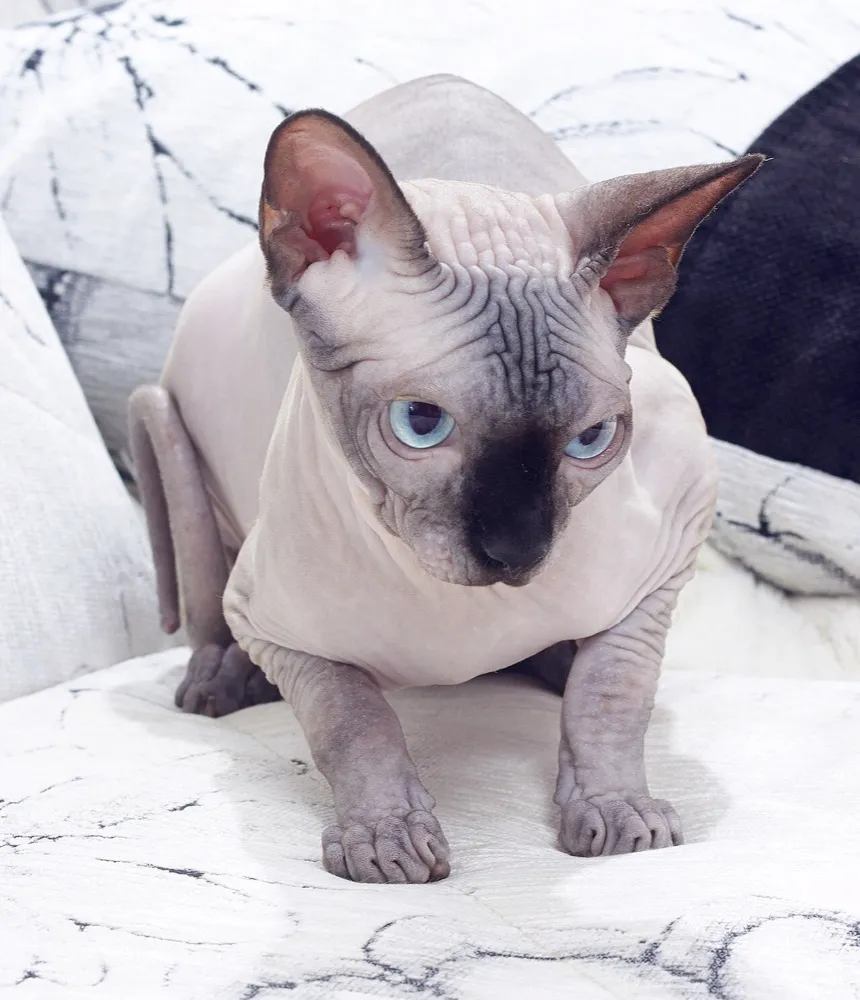
The deliberate outlier, at CFA rank #9. A hairless cat is an indoor cat by construction — this breed lives its whole life in climate control — so the “indoor” box isn’t just ticked, it’s welded shut. But read the temperament profile before falling for the wrinkles: the CFA describes a cat that’s “curious, outgoing, very intelligent,” follows you room to room with “a stream of steady chatter,” and genuinely struggles alone — the breed standard household is two Sphynx, not one.
The maintenance is real and unusual: no fur means oily skin that needs regular baths. And that chatter disqualifies it from thin-walled buildings with noise-sensitive neighbors. So why is it on the list? Because for the remote worker who wants a shadow, a heat-seeking lap companion, and a cat with a dog’s social appetite — all strictly indoors — nothing else on this page comes close.
What every indoor cat needs (breed regardless)
- A registered microchip. Indoor cats are the least likely to wear ID and the most likely to be mistaken for strays when they slip out — the numbers are stark, and they’re in our indoor cat GPS tracker piece.
- A door-dash plan. Most indoor cats don’t need a tracker, but door-dashers, new adoptions, and post-move cats are the exceptions; same article has the honest math.
- Vertical space and routine. A cat tree by a window is cheap square footage. If you feed on a schedule (or run a microchip feeder in a multi-cat home), the routine itself is enrichment.
- A collar decision made calmly. If you ever want ID or electronics on the cat, acclimate it to a collar before you need it, not during an emergency.
- A money plan. An indoor life changes a cat’s risk profile, which is exactly the variable that decides whether insurance for an indoor cat is worth it.
FAQ
Which of these breeds is best left alone during a workday?
British Shorthair, with the Russian Blue close behind — both profiles emphasize self-sufficiency and a preference for calm routine. The Sphynx is the wrong answer: it’s the most companionship-dependent cat here, and the CFA suggests it does best with another cat in the house.
Are these breeds fine in a small studio?
The Exotic Shorthair and Russian Blue are the best studio fits — lowest energy and smallest space demands, per their CFA profiles. The Ragdoll works too but at male weights over 20 lbs it appreciates real furniture-to-furniture geography. All five want a window perch; that’s non-negotiable enrichment in any square footage.
Do quiet breeds mean a silent apartment?
Quieter, not silent. “Rarely meows” describes tendency, and individual cats vary — a food-motivated cat of any breed learns that 6 a.m. vocals produce breakfast. Scheduled feeding (human or automatic) removes that lesson before it’s learned.
Should any of these cats go outside?
The Sphynx can’t, and the other four don’t need to — these breeds were ranked precisely because their energy and temperament fit an indoor life. If yours turns out to be the rare door-lurking exception, the escape-artist tracker guide covers the hardware side.
Sources
- CFA — Most Popular Breeds for 2024 — 2024 registration ranking: Maine Coon #1, Ragdoll #2, Persian #3, Exotic #4, British Shorthair #7, Sphynx #9, Russian Blue #10 (accessed August 2026)
- CFA — Ragdoll breed profile — “gentle, calm and sociable,” moderately active, males 20+ lbs, “not talkative” (accessed August 2026)
- CFA — British Shorthair breed profile — “quiet, sedate,” four-feet-on-the-floor preference, not a lap cat, males to 17 lbs (accessed August 2026)
- CFA — Exotic breed profile — Persian temperament, “devoted but not intrusive,” rare meows, weekly combing vs Persian daily grooming (accessed August 2026)
- CFA — Russian Blue breed profile — “don’t need a lot of space to feel content,” reserved with strangers, coat combing 2–3×/month (accessed August 2026)
- CFA — Sphynx breed profile — “curious, outgoing, very intelligent,” steady chatter, regular bathing, thrives with feline company (accessed August 2026)
Photo credits
- Ragdoll photo: Simone Johnsson via Wikimedia Commons, CC BY-SA 2.0 (resized)
- British Shorthair photo: BritishEmpire via Wikimedia Commons, CC BY-SA 3.0 (resized)
- Exotic Shorthair photo: Tcm1707 via Wikimedia Commons, CC BY-SA 4.0 (resized)
- Russian Blue photo: Andrzej Barabasz (Chepry) via Wikimedia Commons, CC BY-SA 4.0 (resized)
- Sphynx photo: Dmitry Makeev via Wikimedia Commons, CC BY-SA 4.0 (resized)
SniffTester is reader-supported. Some links on this page may be affiliate links, which earn us a commission at no extra cost to you. We are not sponsored by any brand we cover. Full disclosure.